The Toy Superstore Standard
We don't just stock toys; we curate tools. Every item is stress-tested by a practicing Teacher for suitability and developmental ROI. We’ve completed the expert analysis so you can shop with confidence - here is your instant summary of exactly what this tool unlocks.

Understanding Our Icons
Play Personas
🧱
The Builder
Spatial reasoning, engineering & structural planning
📖
The Storyteller
Social role-play, narrative building & emotional processing
🎨
The Artist
Visual expression, fine motor design & sensory creating
🔬
The Scientist
Hypothesis testing, logic & cause-and-effect reasoning
🌍
The Explorer
Whole-body movement, balance & physical discovery
Play Specifications
🤏
Fine Motor
Hand-eye coordination, pincer grip & dexterity
🏃
Gross Motor
Core stability, balance & whole-body coordination
💡
Creativity
Abstract thinking, imagination & divergent problem solving
🗣️
Language
Vocabulary expansion, storytelling & verbal communication
🤝
Social & Emotional
Turn-taking, empathy & cooperative negotiation
🧠
Cognitive
Critical thinking, memory & information processing
🖐️
Sensory
Visual tracking, tactile feedback & auditory stimulation
Noise Profile
🔈
Low Noise
Silent or near-silent; ideal for deep focus work
🔉
Medium
Conversation volume; mechanical clicks or wooden sounds
🔊
Loud
High stimulation; electronic sounds or musical output
Play Context
🏠
Indoor
Suitable for lounge, playroom or classroom environments
🌳
Outdoor
Weather-resistant; built for active or rough play
🧳
Travel
Compact & portable; fits in bags for car or cafe
🛁
Bath
Fully waterproof; designed for sensory water play
🛏️
Bedtime
Low stimulation; supports winding down for sleep
👤
Independent Play
Self-correcting design; allows for solo engagement
👥
Group Play
Encourages collaboration, sharing & multi-child interaction
👨👩👧
Parent Led
Requires adult scaffolding or guided interaction

Why gift givers choose this
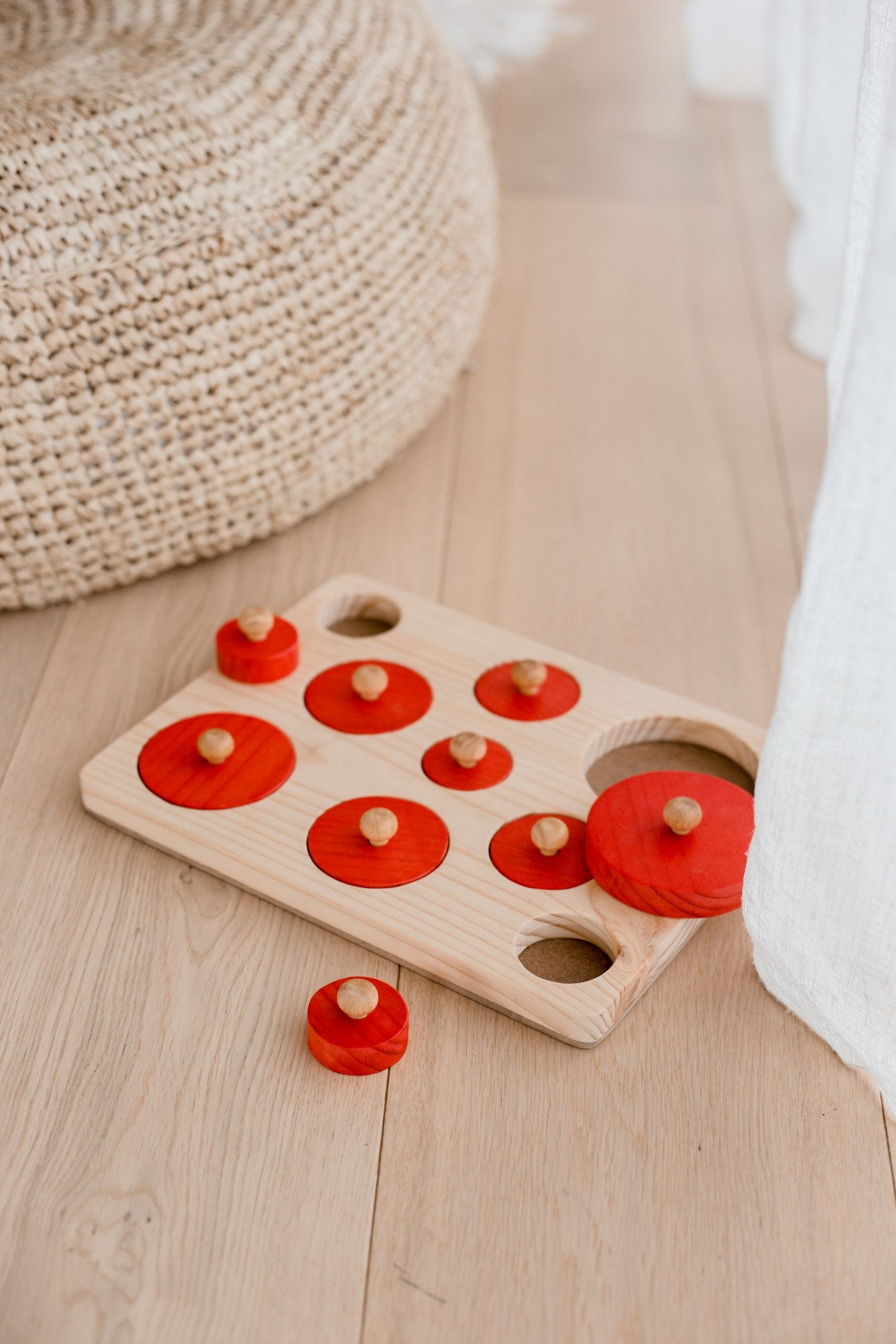
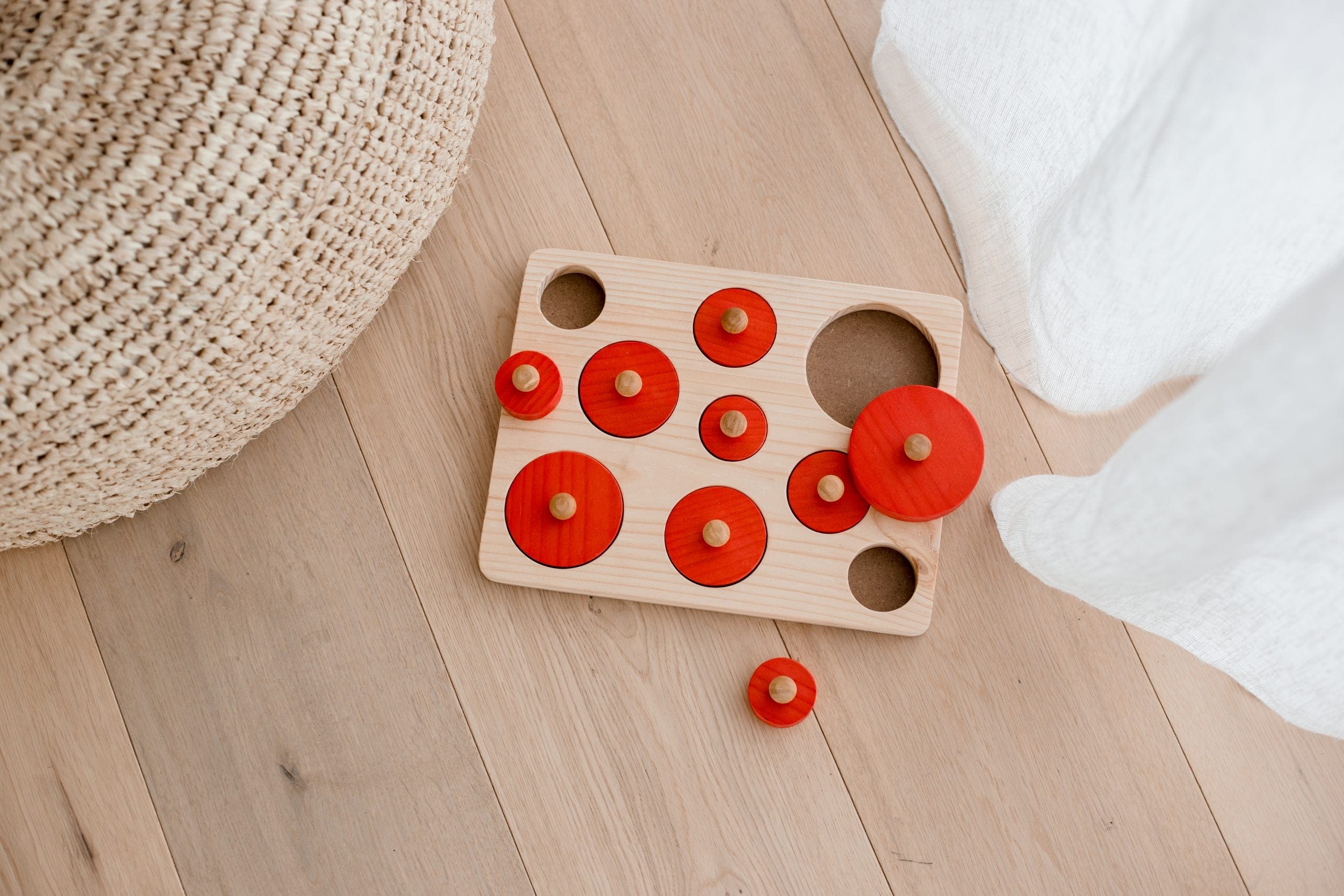
- Self-Correcting – The toy teaches the child, so you don't have to constantly intervene.
- Plastic Free – Solid sustainable timber that looks beautiful in your living room.
- Calm Play – No lights or noises, just deep, quiet concentration.

Included in the box
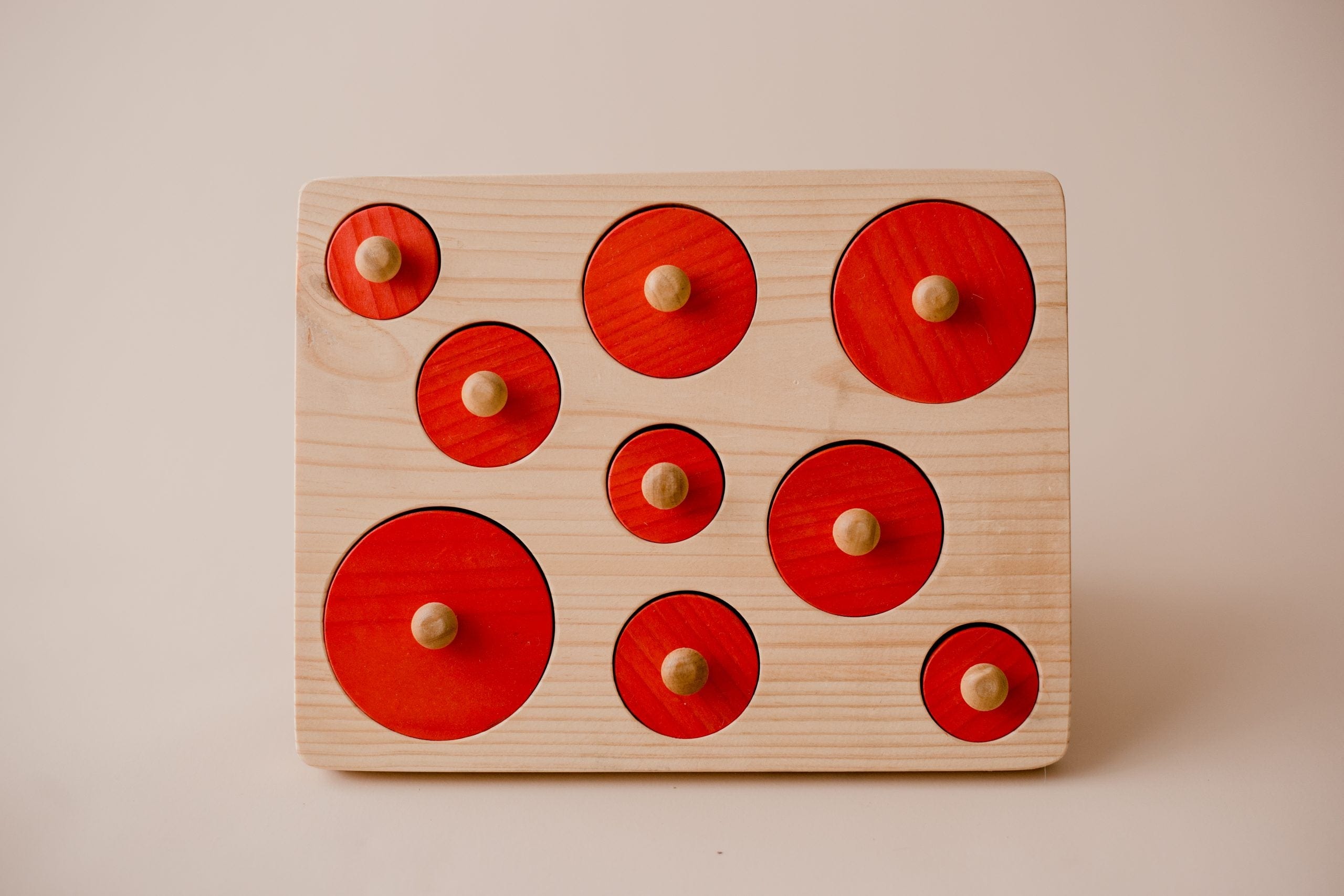
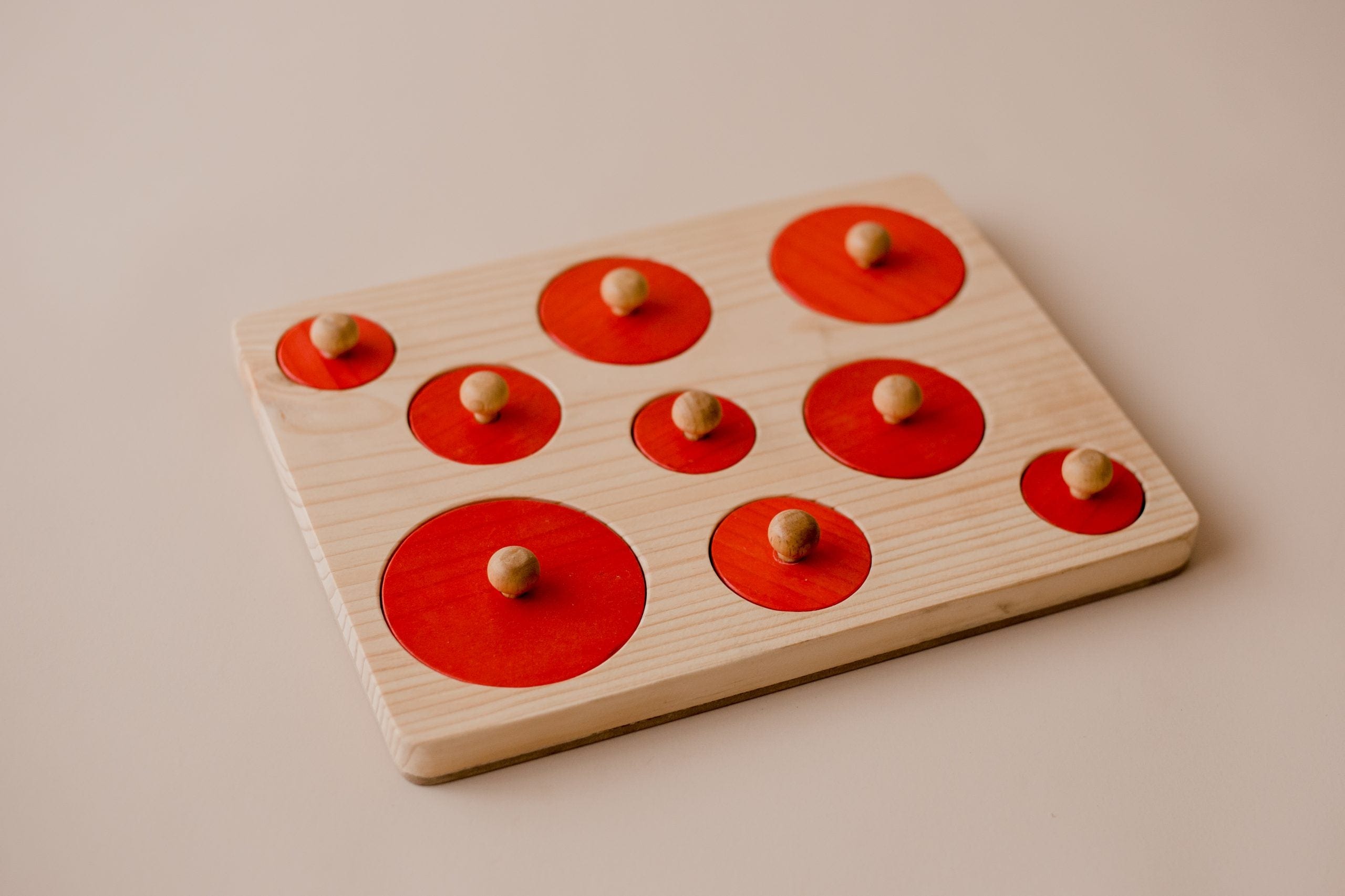
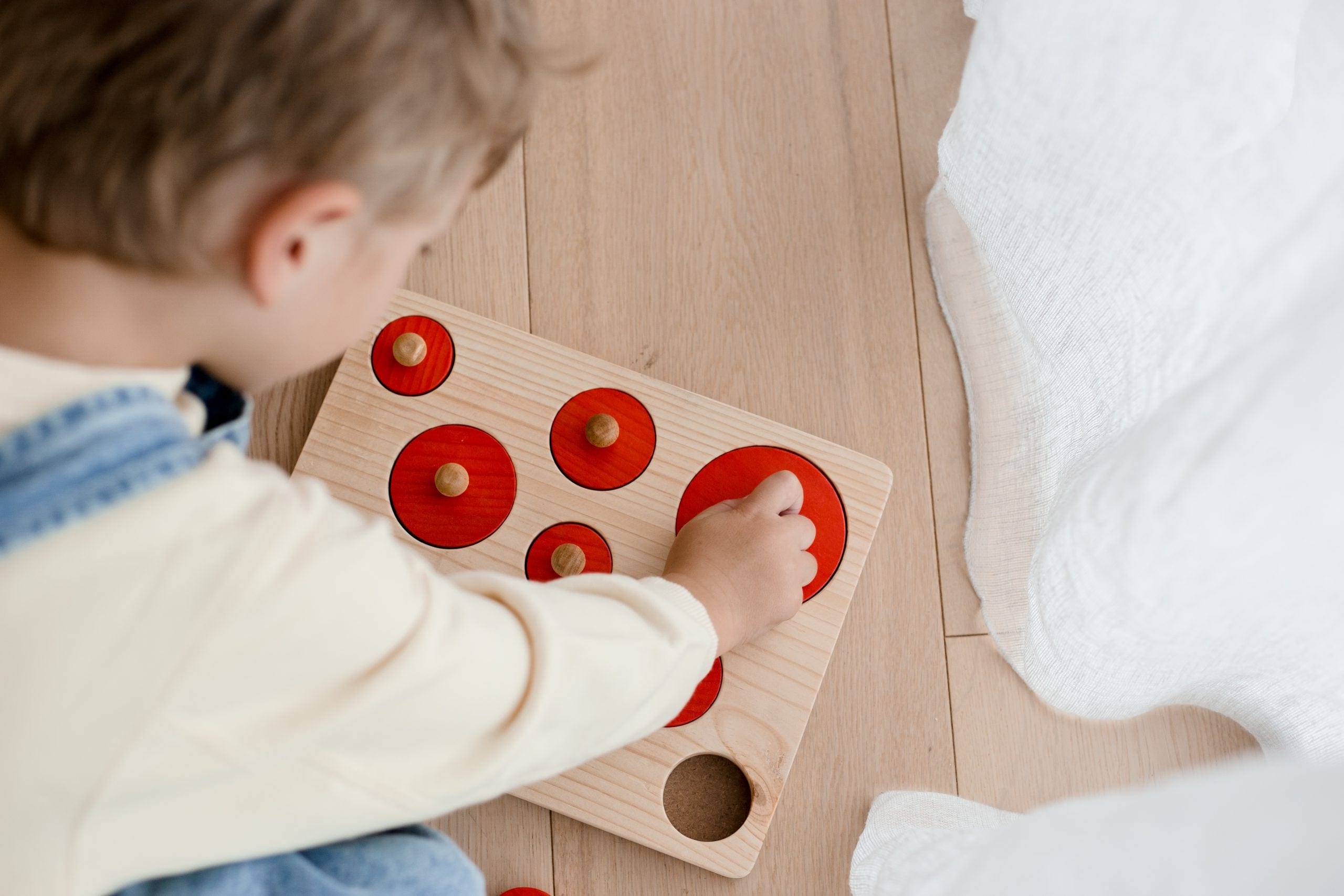
One solid wooden base with nine graduating circular wooden inserts with knobs.

Frequently Asked Questions about Montessori Size Puzzle


Still not sure?
Use our gift finder to find the perfect gift
Answer a few quick questions and we'll help you find the perfect gift!